


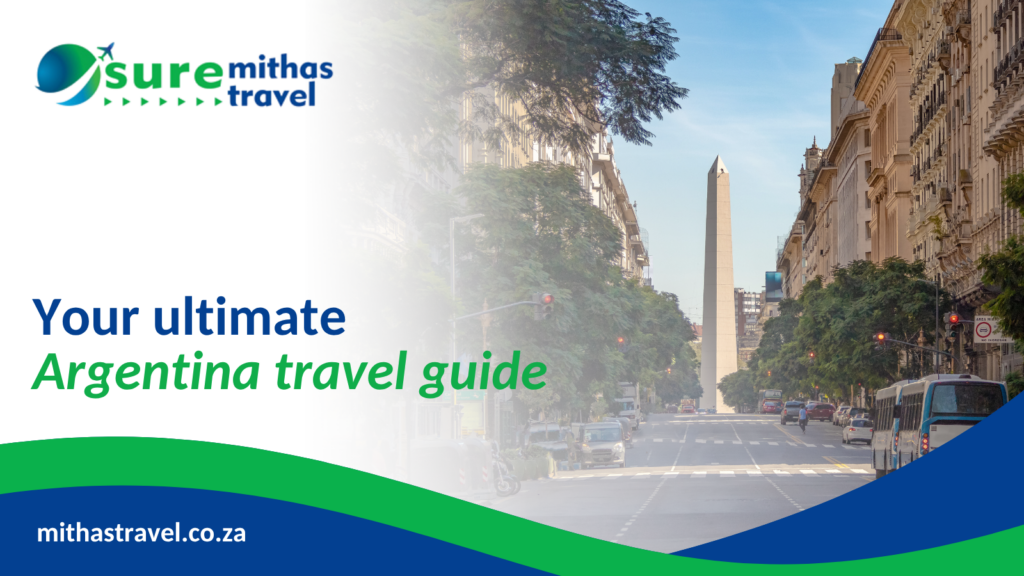
Argentina is difficult to sum up in a single picture. One day you could be lingering over dinner in Buenos Aires; a few days later, you could be standing in front of a glacier in Patagonia, tasting Malbec beneath the Andes in Mendoza or feeling the spray from Iguazú Falls. That variety is what makes Argentina travel so rewarding and why a little planning makes such a difference.
If you’re a South African thinking about an Argentina vacation, this guide covers the practical questions as well as the highlights: the best time to visit Argentina, how to shape an itinerary, what to eat and which experiences are worth making room for.
Table of Contents
ToggleBest time to visit Argentina
Argentina is in the Southern Hemisphere, so its seasons broadly line up with South Africa’s. The catch is that the country stretches a very long way from north to south, which means there is no single perfect month for every region.
December to February is summer and one of the most popular periods for Patagonia, especially for hiking and longer days outdoors. It is also peak season, so accommodation and internal flights can fill up quickly. For the glacier region around El Calafate, Argentina’s official tourism site recommends spring and summer, roughly September to March, although the Perito Moreno Glacier can be visited year-round.
March to May brings autumn and is an excellent time for Buenos Aires and Mendoza, with generally milder temperatures and the wine harvest season adding extra energy to Mendoza. June to August is winter: ski destinations come into their own, while snow and weather may limit some high-altitude or seasonal hiking routes in Patagonia. September to November brings spring, a good shoulder season for Buenos Aires and central Argentina, with Patagonia becoming increasingly accessible as summer approaches.
Building an Argentina itinerary
Most first-time visitors need 10 to 14 nights to combine two or three regions at a comfortable pace, so a sensible Argentina itinerary is built around a few regions rather than an attempt to see everything in one trip. Domestic flights are the practical way to cover the long distances. Sure Mithas Travel can help compare flight options and sequence the route so that you spend more of the holiday travelling through Argentina, not simply getting from one airport to another.
A good starting point is three or four nights in Buenos Aires, followed by three to five nights around El Calafate and, if hiking is a priority, El Chaltén. From there, add either Mendoza for wine country or Puerto Iguazú for the falls. Trying to squeeze Buenos Aires, Patagonia, Mendoza and Iguazú into a short trip can turn an exciting holiday into a string of airport days.
If you want to explore beyond Argentina as part of a longer trip, it is also worth looking at other North and South America holidays before finalising your route.
Buenos Aires travel: a city best enjoyed slowly
Buenos Aires travel is less about racing between landmarks and more about getting a feel for its neighbourhoods. Recoleta brings grand architecture and leafy avenues; Palermo is known for restaurants, cafés, boutiques and nightlife; San Telmo has cobbled streets, antiques and a strong tango identity.
The city’s European influence is easy to see, but Buenos Aires has a character entirely its own. Meals happen late, so dinner at 9 pm is perfectly normal, and evenings tend to unfold slowly. Rather than trying to tick off every sight, choose a few neighbourhoods, leave time for a long lunch or coffee, and consider one good tango performance. It is the kind of city that rewards a little breathing room.
Patagonia Argentina: glaciers, mountains and big landscapes
Patagonia Argentina is not one destination but an enormous region, and most travellers focus on a small part of it. El Calafate is the main gateway to Perito Moreno Glacier in Los Glaciares National Park. The glacier lies about 80 km from the town, and visitors can see it from a network of walkways, by boat or, on suitable guided excursions, on the ice itself.
El Chaltén is the better base if trekking is high on your list, with trails leading into the dramatic mountain scenery around Mount Fitz Roy. Further south, Ushuaia is one of the world’s southernmost cities and a major gateway for Tierra del Fuego and Antarctic cruise departures. Patagonia’s distances and weather are part of the adventure, but they also make advance planning worthwhile, particularly during the December-to-February high season.
Things to do in Argentina
- Iguazú Falls On the Argentina-Brazil border, this immense waterfall system sits in subtropical rainforest. Iguazú is wider than Niagara Falls, while its highest drops are taller than Niagara’s. The Argentine side has extensive walkways that bring you remarkably close to the water.
- Mendoza’s vineyards Argentina’s best-known wine region lies against the Andes and is synonymous with Malbec. Vineyard visits, long lunches and mountain views make it an easy contrast to the pace of Buenos Aires.
- Península Valdés This UNESCO-listed stretch of the Patagonian coast is known for marine wildlife, including southern right whales in season, sea lions, elephant seals and penguins.
- The Train to the Clouds In the north-western province of Salta, the Tren a las Nubes climbs through high-altitude Andean scenery and offers a completely different side of Argentina from the capital and southern glaciers.
Argentine food: what to eat
Argentine food is one of the pleasures of travelling here. Beef and asado – meat cooked over fire or coals – are central to the country’s food culture, and a relaxed meal at a parrilla is worth making time for. Empanadas change subtly from region to region, while dulce de leche appears in everything from pastries to desserts and ice cream.
There is also a strong Italian influence, particularly in Buenos Aires, so pasta, pizza and helado sit comfortably alongside traditional grill houses. In Mendoza, local wine is naturally part of the experience, with Malbec the variety most closely associated with the region.
Where to stay
Accommodation can shape the feel of an Argentina holiday as much as the route itself. Buenos Aires ranges from elegant city hotels to smaller neighbourhood properties; Patagonia offers everything from practical bases in El Calafate to remote lodges; and Mendoza has vineyard stays that make the wine country part of the holiday rather than a day trip. You can browse hotel options online or ask a consultant to match the location and style of stay to your itinerary.
Is Argentina safe for travellers?
For most visitors, the practical approach is the same as it would be in any large international city: stay aware of your surroundings and keep phones, wallets and bags secure, particularly in busy tourist areas and on public transport. Current travel advice notes that pickpocketing, bag snatching and robbery can occur in Buenos Aires and other major cities, so it is better not to describe any tourist neighbourhood as risk-free.
That shouldn’t dominate your holiday planning, though. Use reputable transport, avoid displaying valuables, take extra care around busy stations and tourist hotspots, and check current travel advice before departure. Conditions can change, and sensible everyday precautions go a long way.
Argentina visa requirements for South Africans
There is good news for South African holidaymakers: holders of ordinary South African passports do not currently require an Argentina visa for tourist visits of up to 90 days. Argentina’s National Directorate of Migration lists South Africa as visa-exempt for ordinary-passport tourists, and Argentine consular guidance also includes South Africa among the countries whose citizens can visit visa-free for up to 90 days.
Entry rules can change, so it is still sensible to confirm the latest requirements before paying for any non-refundable arrangements. The Argentine Consulate General in Johannesburg handles consular and visa matters for South Africa. A travel consultant can also help you work through the practical travel arrangements before departure.
Planning your Argentina holiday
The biggest challenge with Argentina is not finding enough to do; it is deciding what to leave for next time. A well-planned route keeps the long distances manageable and gives each region enough time to feel distinct. That is where experienced itinerary planning matters, especially when internal flights, seasonal conditions and several hotel stops need to work together. Get in touch to start building your Argentina itinerary.
Frequently asked questions about travelling to Argentina
There’s no single best month for the whole country. December to February suits Patagonia, March to May suits Buenos Aires and Mendoza, June to August is ski season, and September to November is a good spring shoulder season for central Argentina.
Ten to 14 nights lets you combine two or three regions comfortably, such as Buenos Aires and Patagonia, or add Mendoza or Iguazú, without losing days to constant airport transfers.
No. Ordinary South African passport holders can currently visit Argentina visa-free for tourist stays of up to 90 days, though it’s worth confirming the latest requirements before booking non-refundable arrangements.
Argentina is generally safe for tourists, though pickpocketing and bag snatching can occur in Buenos Aires and other major cities. The same everyday precautions that apply in any large international city apply here.
Buenos Aires, Patagonia (El Calafate and El Chaltén), Mendoza’s wine country and Iguazú Falls cover Argentina’s most different landscapes and make a strong first-time itinerary.